

Veteran Hospice Care in Detroit, MI.
End-of-life care that honors your service, coordinates your benefits, and brings a fellow veteran to your side.
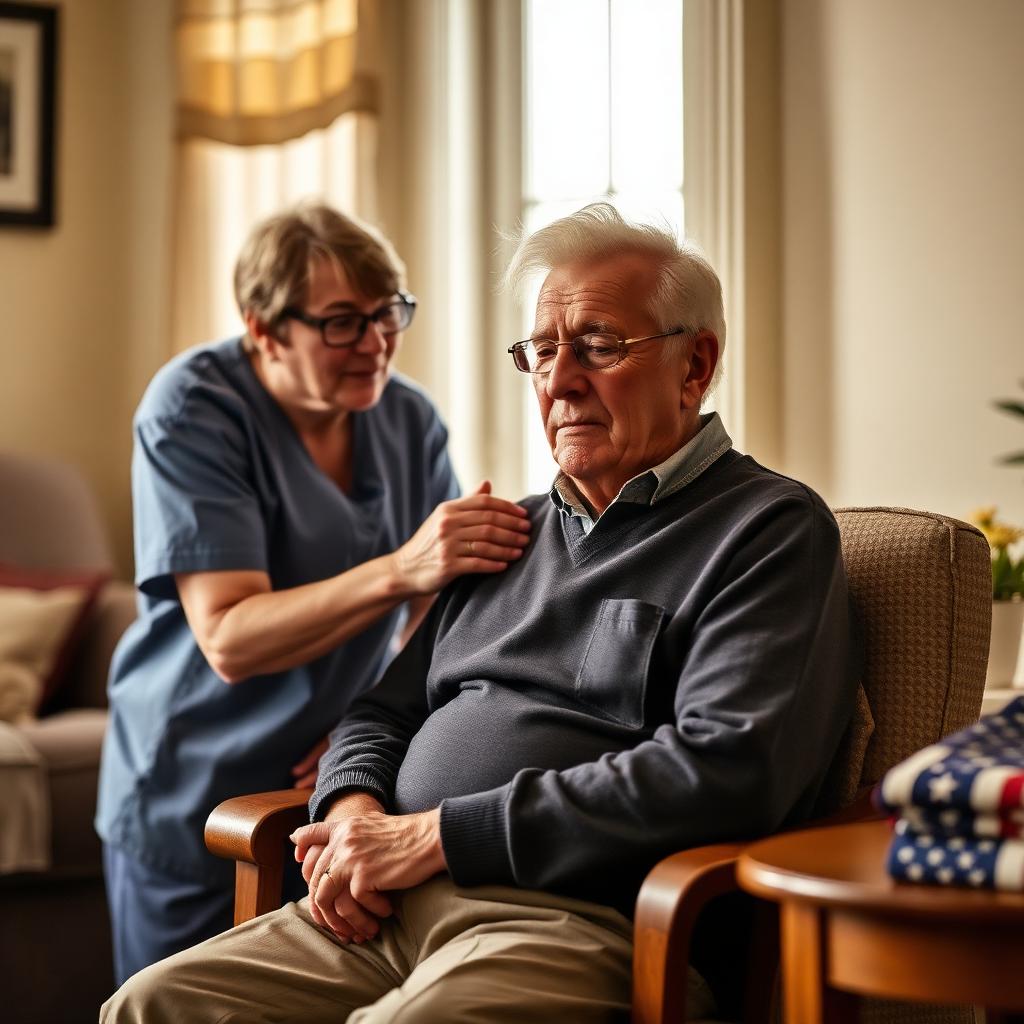
"Care that honors military service — and the benefits veterans have earned."
Proud partner of the We Honor Veterans program.
Veteran Hospice Care
End-of-life care that honors military service — and makes the most of the benefits veterans have earned.
Veterans who served this country often approach end-of-life care with specific needs that general hospice programs don't always address well. Military service leaves marks — on the body, on the mind, on how a person relates to pain, to vulnerability, to asking for help. Combat exposure, moral injury, PTSD, and the particular stoicism that military culture builds in can all affect how a veteran experiences dying and how they respond to care.
At St. Marie's, we care for veterans with attention to that history. This page covers the practical side — how VA benefits work alongside Medicare hospice coverage, what dual-eligible veterans can access — and the human side: how we make sure a veteran's service is recognized, not overlooked, in the final chapter of their life.
VA Benefits and Medicare Hospice
How they work together.
One of the most common questions families of veterans ask: “If my father is on Medicare hospice, can he still use his VA benefits?” The answer is yes — and the combination can provide more comprehensive coverage than either benefit alone.
Medicare covers most hospice costs for eligible veterans at 100% — nursing, physician care, medications related to the terminal illness, medical equipment, personal care, spiritual care, and bereavement support. The Medicare Hospice Benefit is the primary payer for hospice services.
The VA runs a parallel hospice and palliative care program for enrolled veterans. Where VA and Medicare hospice interact:
- A veteran enrolled in both Medicare and VA healthcare can use Medicare for hospice services and VA for conditions unrelated to the terminal diagnosis
- The VA may cover items the Medicare Hospice Benefit doesn't — including some medications, equipment, or treatments for service-connected conditions that fall outside the hospice benefit
- Veterans Aid and Attendance pension benefits may continue alongside Medicare hospice — this benefit helps cover personal care and assisted living costs that neither Medicare nor VA hospice covers directly
- Some veterans may qualify for VA-provided hospice care through VA medical centers or contracted community hospices, independent of Medicare — eligibility depends on enrollment status and service-connected disability rating
The coordination between Medicare and VA requires knowing what each benefit covers and which payer applies to each specific service. In practice, this is where families most often get confused — and where getting clear answers up front prevents significant financial surprises later. Our intake team and social workers are experienced in navigating dual-eligibility situations and can walk through the coverage specifics with you before care begins.
Dual-eligible coverage, coordinated.
The combination can provide more comprehensive coverage than either benefit alone. Our intake team and social workers are experienced in navigating dual-eligibility situations and can walk through the coverage specifics with you before care begins.
VA Hospice Benefits for Enrolled Veterans
Hospice and palliative care as part of VA benefits.
Veterans enrolled in VA healthcare are entitled to hospice and palliative care services as part of their VA benefits, regardless of service-connected status. What the VA covers:
For veterans in the Detroit tri-county area, the primary VA facility is the John D. Dingell VA Medical Center in Detroit. The VA Ann Arbor Healthcare System also serves Michigan veterans. Both have social workers who can help coordinate hospice care through VA channels.
Michigan veterans can reach the John D. Dingell VA Medical Center at 313-576-1000 or through va.gov. If you're unsure whether your loved one is enrolled in VA healthcare, the VA eligibility center can help: 1-877-222-8387.
What the VA covers:
Veteran-centered care, developed with the Department of Veterans Affairs.
St. Marie's participates in the We Honor Veterans program, a national initiative developed by the National Hospice and Palliative Care Organization (NHPCO) in collaboration with the Department of Veterans Affairs. The program trains hospice providers to deliver veteran-centered care — recognizing that the experiences of military service, combat, and the particular culture of the armed forces shape how veterans experience illness and dying.
What this means in practice for our veteran patients:
The pinning ceremony deserves specific mention. It’s a small ceremony — sometimes just the patient, one or two family members, and a volunteer or team member — in which a veteran receives a pin acknowledging their service, a thank-you is spoken on behalf of a grateful nation, and the conversation about their service, if the veteran wants it, is opened. For veterans who have never talked about their military experience, this is sometimes the moment. For those who have, it’s a formal acknowledgment that what they did mattered. It costs nothing. It lands as something.
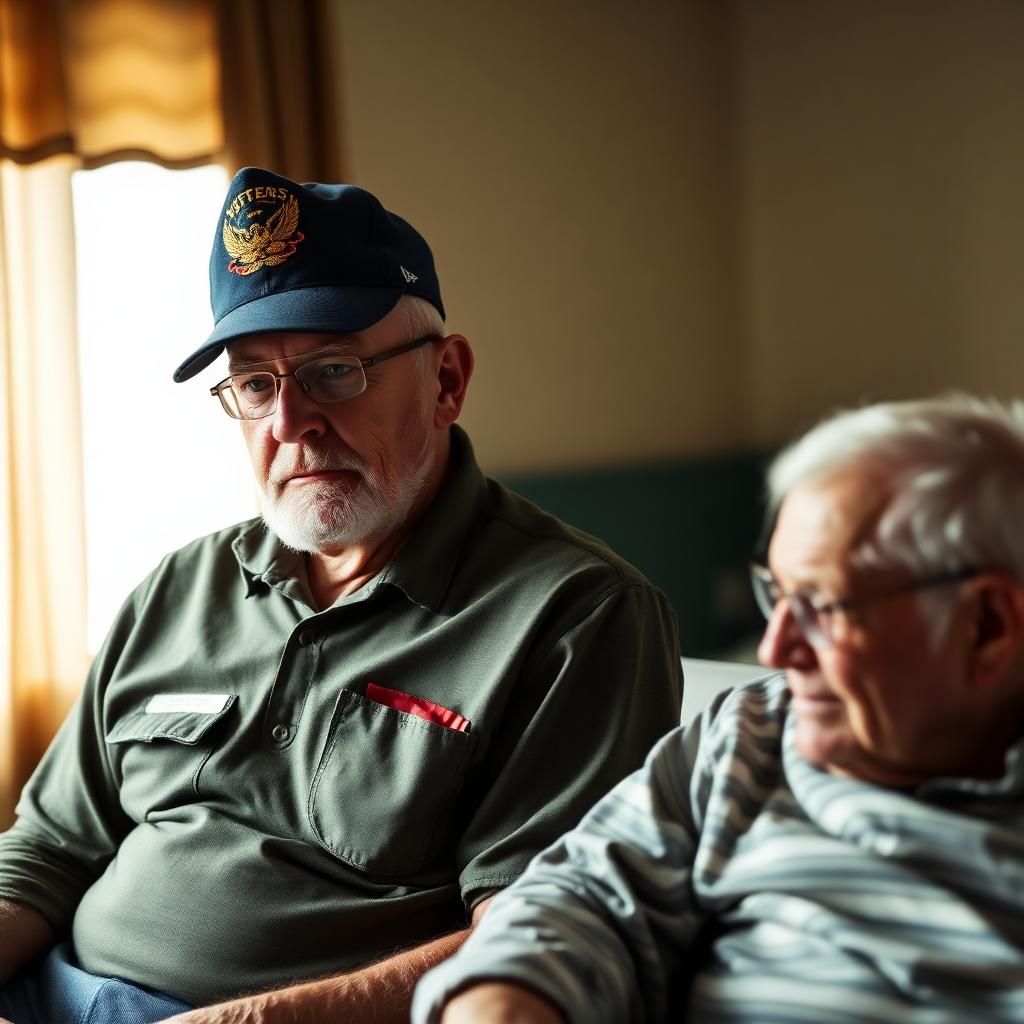
A fellow veteran — someone who has served and understands.
Military-Related Conditions and End-of-Life Care
Conditions specific to military service.
Veterans’ end-of-life care is sometimes complicated by conditions specific to military service:
We ask, and we listen.
These aren't just background facts — they affect how a veteran responds to care, which medications work, which care approaches feel safe versus threatening, and how the dying process unfolds. A care team that doesn't know a veteran's military history is operating without important clinical information. We ask, and we listen.
Care That Honors Service
Talking to Us About Veteran Care
If you’re a veteran or the family member of a veteran in Detroit, Southfield, Troy, Warren, Sterling Heights, or anywhere across the Michigan tri-county area, and you’re weighing hospice, we’d like to talk. The benefits coordination, the We Honor Veterans program, the Veteran volunteer, the pinning ceremony — all of this is available to your loved one as part of the care we provide.