

Hospice Massage Therapy
Gentle Clinical Comfort, in the Home You Love
Licensed massage therapists trained for end-of-life care — serving Detroit, Southfield, and patients across Michigan.
- IN-HOME SESSIONS
- LICENSED THERAPISTS
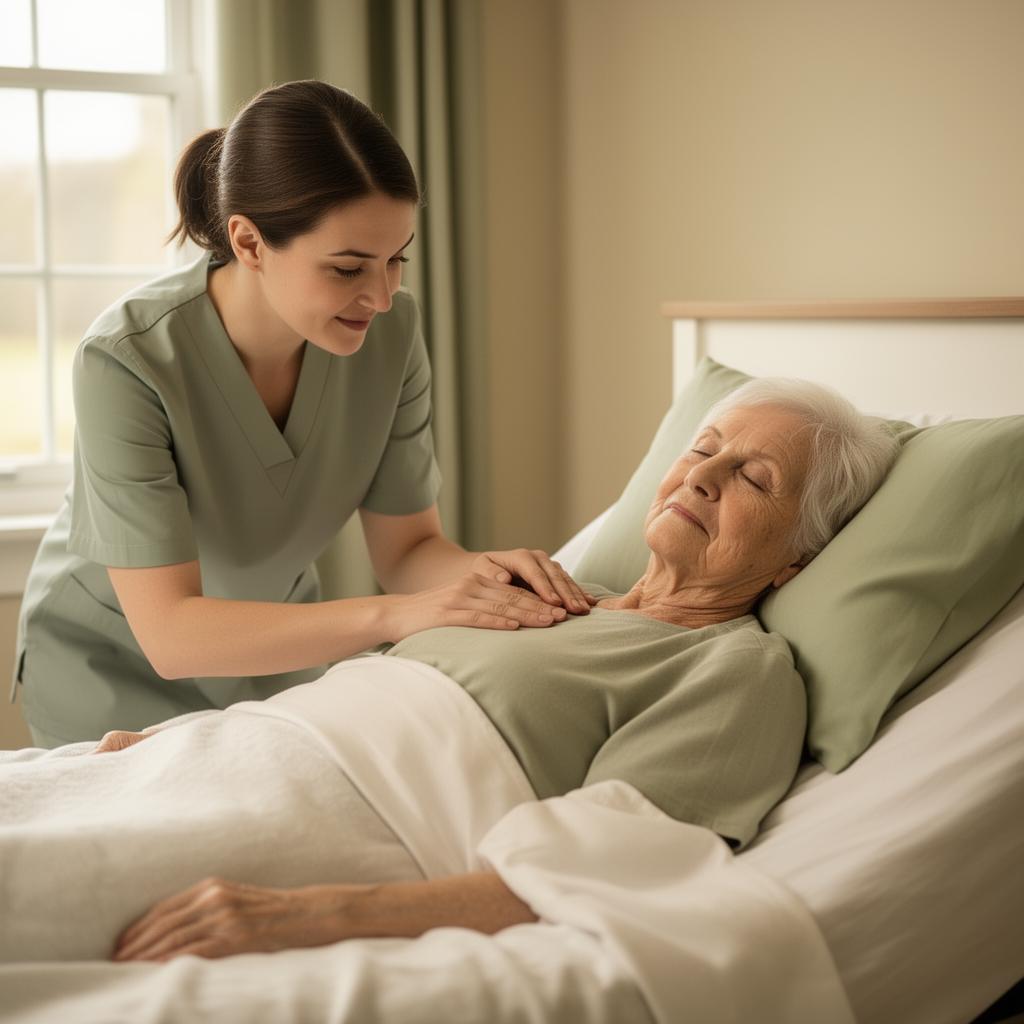
"Not a spa."
Clinical comfort care
Hospice Massage Therapy in Detroit, MI
When we mention massage therapy during a hospice consultation, families almost always pause. Some say no right away. A few ask if it's serious. The reaction makes sense — "massage" usually brings the spa to mind, not a care plan for someone in their final months.
Hospice massage isn't that. It's a clinical comfort service, done in the patient's home by a licensed therapist with end-of-life training. The pressure is light. The techniques are slow. The goal isn't relaxation in the spa sense — it's relief from the kind of physical discomfort that builds up when a body has spent too long in one position, and that medication alone doesn't always settle.
Among the patients who get the most from it, almost none are still active. They're the ones in bed for most of the day, dealing with stiffness, restlessness, anxiety in the late afternoon, and a slow loss of the everyday touch — a hand on the shoulder, an arm taken at the door — that used to be part of their lives without anyone thinking about it.
That's the gap our massage therapists work in.
What Massage Therapy Actually Addresses
There’s a kind of discomfort in hospice families often don’t expect. Tight shoulders, stiff legs, sore feet, dry skin, and back tension can develop when the body stops moving the way it once did — not from the illness itself, but from the physical strain around it.
Muscle tension from prolonged bed rest or limited mobility
Poor circulation in the legs and feet
Anxiety, restlessness, and physical tension as the body slows down
Trouble sleeping — patients often rest more deeply after a session
The simple, restorative comfort of being touched gently
What a Session Looks Like
Sessions happen in the patient's home, wherever they're already comfortable — in bed, in a recliner, sometimes in a wheelchair. The patient doesn't move, doesn't change clothes, doesn't transfer to a table. The therapist works around what the patient can manage that day.
A typical session runs 30 to 45 minutes. The techniques are deliberately gentle — light touch, slow movements, careful attention to fragile skin and bones. Pressure stays at a level the patient finds soothing. There's no deep-tissue work in hospice massage, and there shouldn't be. Fragile bodies need a different kind of contact.
Family members are welcome to stay or step out. Some patients prefer the company. Others want the quiet. Both are normal.
Wherever they're comfortable
Bed, recliner, or wheelchair — no transfers, no changing clothes.
30 to 45 minutes
Pace and length adjusted to what the patient can manage that day.
Light, slow, careful
No deep-tissue work. Pressure stays soothing, never strenuous.
Family welcome
Stay nearby or step away — whatever feels right.
Who Benefits Most From It
In practice, the patients who get the strongest response are:
Two Assumptions That Cost Families Time
The two most common reactions when massage therapy comes up: “That sounds like a spa thing,” or “They’re too sick for that.”
Both miss what the service is.
It isn’t relaxation in the spa sense — it’s targeted clinical comfort, adapted to fragile bodies, delivered by a therapist trained for end-of-life care rather than general practice. And “too sick” is almost always the wrong frame. The gentleness is what makes the work possible for very ill patients. The therapist adjusts to where the patient is, not the other way around.
Families who say yes early generally tell us later they wish they’d started sooner.
The ones who decline at admission and call back two weeks in still benefit — but they’ve usually been watching their loved one uncomfortable for longer than they needed to.
Included in Every Care Plan
Massage therapy is built into every St. Marie's Hospice care plan, alongside the rest of the work our interdisciplinary team provides — including music therapy, nursing care, and family support. The Medicare Hospice Benefit covers it in full. Nothing extra to schedule or pay for.
If you'd like to talk through whether massage therapy would help your loved one specifically — based on their current condition, not a general description — call (800) 489-7977 or reach us through our contact page. We'll walk you through what a session would look like in your home, and you can decide from there.
Talk to our team
We'll walk you through it, at your pace.
Available 24/7 across Detroit, Southfield, and Michigan. Covered in full by the Medicare Hospice Benefit.